Why Cooling a Computer in Space Is So Hard
- Sahil Harwani
- October 15, 2026
- Blog
- 0 Comments
Why Cooling a Computer in Space Is So Hard
Everyone assumes cooling a computer in space is easy. Space is cold, right?
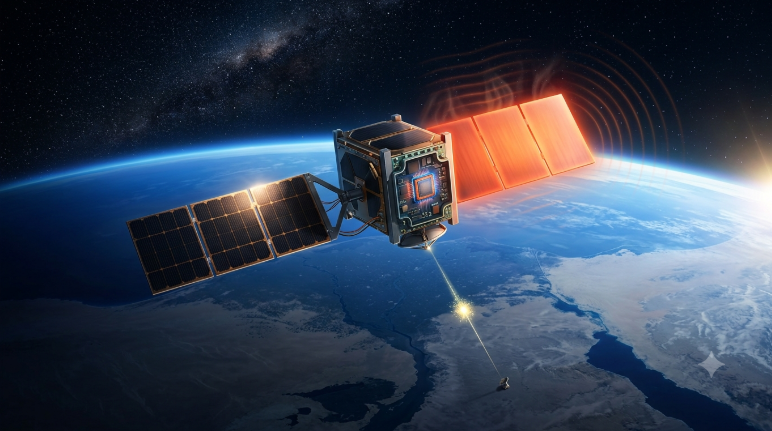
It’s actually the opposite. On Earth, a data centre cools itself with air and water carrying heat away. In space there’s no air to carry anything. A chip can only get rid of heat by radiating it out, and that takes big radiators. A hot processor in orbit is a real problem.
That’s why I find TakeMe2Space interesting. This Hyderabad startup is trying to process satellite data in orbit instead of sending everything back to Earth. Think of a satellite photographing a flooded region. Rather than downlinking gigabytes of raw images in a few short passes, it analyses them on board and sends back only what matters. They raised a $5M seed round earlier this year, and they’ve already flown a small satellite on ISRO’s PSLV.
Even Google has started looking at this. They just launched a research satellite called Project Suncatcher with Planet, aiming at AI data centres in orbit, and they openly call cooling the chips a crucial research challenge. SpaceX has said it hopes to start deploying orbital AI compute satellites as early as 2028.
When Google and SpaceX are both asking how to cool chips in a vacuum, you know it’s a hard problem.
As an aerospace engineer, I see it as a budget problem. Every watt of power comes from solar panels you have to launch, and every watt becomes heat you have to radiate away. Add radiation that flips bits in memory, and the fact that nobody can go up and swap a failed board.
So you can’t just put a data-centre design on a rocket. The power, cooling, shielding and fault recovery all have to be redesigned around a computer you can’t touch.
The chip is the easy part to talk about. Everything that keeps it alive up there is the real engineering.