
The Data Security Problem in VC Diligence Nobody Talks About
- Sahil Harwani
- July 23, 2026
- Blog
- 0 Comments
We Paste Everything Into Claude: The Data Security Problem in VC Diligence Nobody Talks About
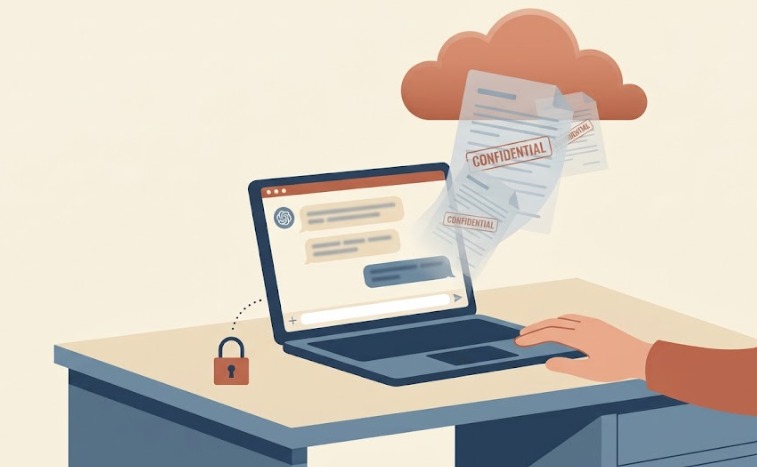
Analysts at VC and PE funds routinely paste confidential term sheets, cap tables, and financial models into personal ChatGPT or Claude accounts, because it works and nobody told them not to. The risk isn’t that these AI tools are unsafe – most enterprise tiers are well-protected. The risk is that the fund has no policy, no audit trail, and no answer if a founder or an LP asks where their data went. The fix isn’t banning AI; it’s giving the team a permissioned, logged environment to use it in.
I asked a VC partner how his team does diligence.
“We use Claude.”
Cool. What do you paste into it?
“Everything. Financials, term sheets, founder decks.”
I smiled and changed the subject. Some conversations you just can’t finish on a call.
This one deserves finishing, though. Because after multiple conversations with VC and PE teams this year, I can tell you that partner is not the exception. He’s the median. Somewhere in almost every fund we’ve spoken to, an analyst has a personal ChatGPT or Claude account with months of confidential deal material sitting quietly in the chat history.
What’s actually sitting in those chat windows
Think about what flows through a fund during one diligence cycle: a founder’s unredacted financial model, cap tables, term sheets with negotiated clauses, customer lists shared under NDA, the fund’s own internal notes on why a deal might die.
Now think about where that goes when it’s pasted into a personal AI account. Not necessarily anywhere bad – enterprise AI tools have serious data protections, and consumer plans have improved a great deal. That’s precisely the problem. There’s no policy. No audit trail. No answer if a founder, or an LP, asks the simple question: “Where did our data go?”
You signed an NDA with the founder. Your analyst’s personal chatbot account didn’t.
Why this stays invisible
Nobody is being careless on purpose. The associate pasting a data room into a chatbot is doing it because it genuinely helps – faster synthesis, better first drafts, fewer late nights. Banning AI tools outright doesn’t fix this; it just pushes the behavior underground, onto personal laptops and personal logins, where the fund has even less visibility than it started with.
The uncomfortable truth is this isn’t a people problem. It’s an infrastructure problem. The fund never gave its team a sanctioned way to use AI on confidential material – so the team built its own, one paste at a time. That’s not a lapse in judgment. That’s what happens whenever a real need shows up faster than the policy meant to govern it.
The five questions a GP should be able to answer today
If AI is anywhere in your diligence workflow (it is), these are worth asking at your next partner meeting:
- Which AI tools does our team actually use – not officially, actually?
- What plan or tier is each analyst on, and what do those terms say about data handling and training use?
- Is deal data leaving our environment right now, and could we show exactly where it went if asked?
- Would our NDA obligations to a founder survive that founder asking how their data room was processed?
- If an analyst left tomorrow, does months of deal intelligence leave with them – inside a personal chat history nobody else can see?
Most of the funds we speak with can answer maybe one of these with confidence. That’s not a criticism. Twelve months ago, almost nobody needed to answer any of them.
The structural fix – and why “just add a policy PDF” doesn’t work
The funds getting this right aren’t the ones that banned AI. They’re the ones that gave AI a home: a shared, permissioned workspace where deal documents live in a controlled data room, where AI agents run against that data room without the data ever leaving the environment, where every run is logged and every output cites its sources, and where an analyst leaving doesn’t mean intelligence leaving with them.
A written policy alone doesn’t solve this, because it doesn’t change where the path of least resistance leads. If the sanctioned tool is slower or clunkier than a personal ChatGPT tab, the team will quietly go back to the personal tab – policy or not. The fix has to be an environment analysts actually prefer to work in, not just a rule they’re supposed to remember.
This is part of why we built CompeteWiser the way we did. Every agent run is scoped to the data room attached to that specific deal. Documents sync from your drive, stay encrypted, and the agents reference them under access controls the fund defines – not whatever an individual’s personal account happens to allow. The output your analyst takes into IC is traceable back to sources your fund can defend, months or years later.
The AI-in-diligence conversation has been about capability for two years. For funds, the more urgent conversation is custody. Your analysts are already using AI. The only question left is whether it’s happening inside your walls or outside them.
Want to see how a scoped, permissioned agent runs on a live deal? Email at sahil@theprodzen.com.